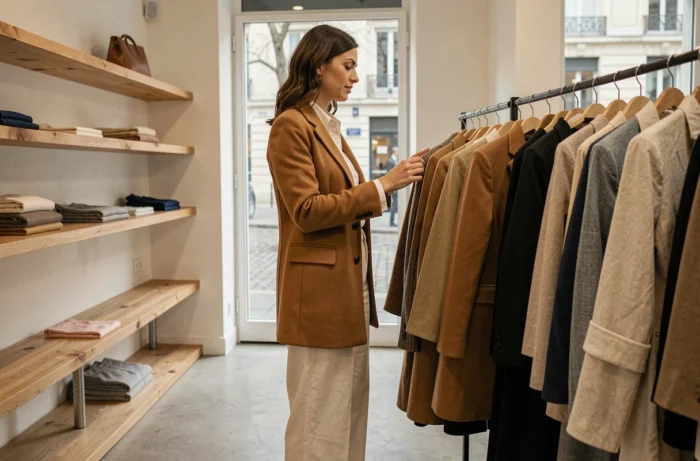
Fashion and beauty trends are evolving under the influence of new constraints: European regulations on ecological claims, restrictions on cosmetic ingredients, and the rise of textile minimalism. Measuring these changes allows us to distinguish underlying movements from fleeting communication effects.
European Regulation and Beauty Claims: What Changes in Practice
The Empowering Consumers for the Green Transition directive (Directive (EU) 2024/825) requires member states to transpose it by March 27, 2026, with application starting from September 27, 2026. Fashion and beauty brands will no longer be able to use generic terms like “ecological,” “green,” or “carbon neutral” without verifiable evidence.
This regulatory constraint directly modifies the available offer. Public certifications, life cycle analyses, and ingredient traceability become selection criteria for consumers who want to enhance their style without relying on marketing storytelling.
To keep up with brands that genuinely document their commitments, specialized sections remain a useful resource, such as the one about the Ulta Beauté site, which features regularly updated fashion selections.
| Claim | Before the Directive | After September 2026 |
|---|---|---|
| “Green product” / “eco-responsible” | Free use, no proof required | Documented proof required (certification or life cycle analysis) |
| “Carbon neutral” | Sufficient carbon offset | Offset alone prohibited as justification |
| Self-awarded labels | Tolerated on packaging | Prohibited without certification from a third-party organization |
The table above summarizes the main discrepancies. For a beauty routine or wardrobe choice, this means that mentions of “natural” or “sustainable” on a product after September 2026 will carry more informative value than today.
Ban on PFAS in Cosmetics: Reformulated Textures and Makeup
France has banned PFAS (per- and polyfluoroalkyl substances) in cosmetics since the end of 2023. These compounds were part of the formulation of many long-wear makeup products, waterproof foundations, and glossy lipsticks.
Their removal has direct consequences on the makeup textures available on the French market. Formulations that offered prolonged wear and a smooth finish relied in part on these molecules. Brands are reformulating with alternatives (plant waxes, substitute silicones), which alters the final result.
What This Changes in a Makeup Routine
- Long-wear foundations may require more frequent application or an additional setting powder, where one application was previously sufficient
- Reformulated liquid lipsticks sometimes present a slightly different finish, more matte or less uniform depending on the brands
- Imported products outside the EU may still contain PFAS, creating a perceived performance gap between distribution channels
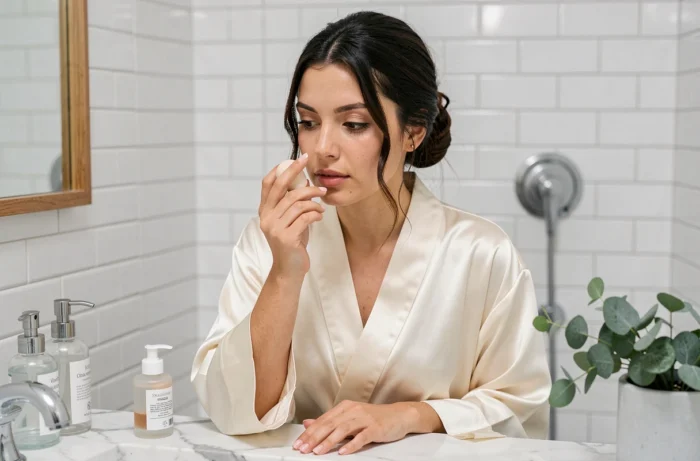
For the daily look, this reformulation pushes towards lighter routines. Skinimalism (minimal makeup supported by well-maintained skin) is gaining ground not only for aesthetic choice but also because PFAS-free alternatives promote a more natural finish.
Quiet Luxury and Textile Minimalism: Measuring the Gap with Fast Fashion
The quiet luxury movement, widely shared on TikTok, is based on understated pieces, tailored cuts, and the absence of visible logos. In contrast, fast fashion continues to offer high volumes at low prices, with weekly collection renewals.
The gap between these two approaches can be measured on several concrete axes.
| Criterion | Quiet Luxury | Fast Fashion |
|---|---|---|
| Wardrobe Renewal | Few pieces per season | Frequent purchases, sometimes weekly |
| Average Lifespan of a Garment | Several years (sustainable materials) | Few months (quick wear) |
| Presence of Logos | Absent or discreet | Variable, often visible |
| Secondary Purchase Channel | Vinted, consignment | Rarely resold (low residual value) |
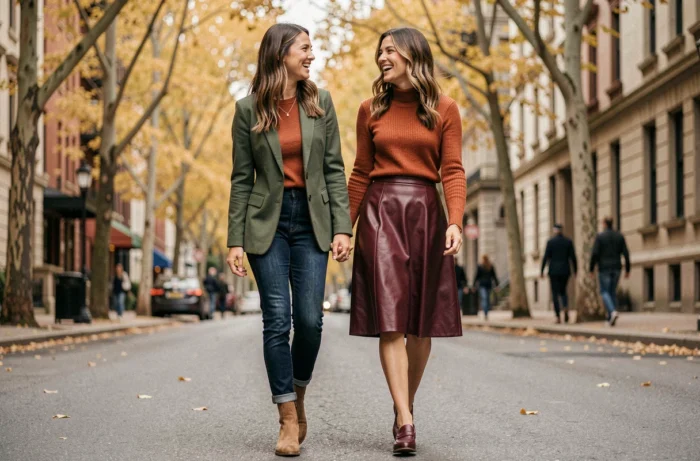
The rise of Vinted as a resale channel amplifies minimalism: buying a quality piece, wearing it for a long time, then reselling it. This circuit modifies the relevant fashion advice for a sustainable style, shifting the choice criterion from initial price to resale value.
Accessories and Fragrance: Style Markers That Persist
In a minimalist wardrobe, accessories take on a proportionally larger role. A structured bag, a simple watch, or a well-chosen pair of glasses are enough to personalize a look made up of neutral basics.
Fragrance follows the same logic. Current fragrance trends favor unique compositions, less gendered, often discovered through TikTok content or niche recommendations. Fragrance becomes the invisible accessory of a minimalist style, the one that distinguishes two identical outfits.
Beauty Routine and Skincare: Skinimalism vs. Complex Protocols
Ten-step beauty routines, popularized by K-beauty, coexist with an opposing trend: reducing the number of products to focus on a few targeted actives. Skinimalism relies on healthy skin that requires little makeup, with a moisturizing care, a serum suited to the skin type, and sun protection.
This approach works better since cosmeceutical formulations (natural actives combined with biotechnological processes) allow for visible results with fewer products. The convergence between performance and simplicity renders some layered protocols obsolete.
- A hyaluronic acid serum covers hydration and filling in fine lines in one step
- Tinted creams with SPF replace the trio of day cream, foundation, and sun protection
- Multi-functional balms (lips, cheeks, eyelids) reduce the number of products in a kit without sacrificing results
To enhance one’s style daily, the choice of skincare products is as important as that of clothing. Well-maintained skin reduces makeup time and naturally leads to a brighter look with less effort.
The coming months will see these trends solidify, driven by a stricter regulatory framework and consumer habits that prioritize sustainability over volume. The decisive criterion remains the consistency between what a product promises and what it delivers, whether for a dress, a serum, or a fragrance.