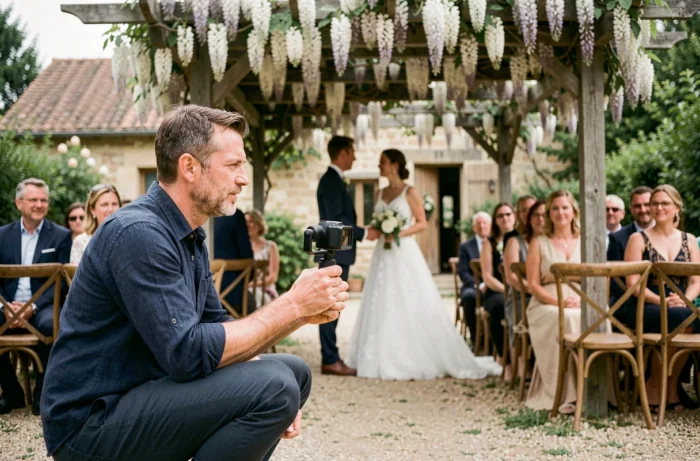
A couple who receives their wedding film three months after the ceremony and discovers that the vows sequence is inaudible, drowned out by the noise of the venue: this is the type of disappointment that can be avoided with a minimum of preparation beforehand. Creating a wedding film that lives up to expectations relies less on equipment and more on concrete choices made well before the big day.
Audio capture of the wedding film: the weak point that no one prepares for
The majority of disappointing wedding videos are due to sound, not image. A camera placed five meters away from the couple during the vows captures mostly the echo of the venue, the whispers of guests, and the caterer’s fan.
To obtain usable sound, at least one wireless lavalier microphone attached to the groom or the officiant is needed. This microphone transmits the signal to a receiver connected to the camera or a separate pocket recorder. Without a dedicated wireless microphone, the dialogue will be drowned out by the ambiance.
Some points to check with the videographer before the ceremony:
- The number of available lavalier microphones (ideally two: one on the groom, one on the officiant or podium)
- The possibility to connect directly to the DJ or sound technician’s mixing desk, which provides clean sound for speeches and live music
- A backup recorder running in parallel, to avoid losing audio in case of a wireless signal cut
In 2026, the documentary trend encourages videographers to use the actual sound from the big day (voices, laughter, ambiance) as the narrative thread of the film, rather than just overlaying music in post-production. The real sound becomes the backbone of storytelling, making audio capture even more crucial. Specialized providers like those listed on moviecreation.fr systematically incorporate this audio work into their services.
Natural light and location scouting for the ceremony
Filming a wedding indoors in a dark church at noon, then transitioning to a cocktail in the bright July sun, means managing two radically different lighting situations in less than an hour. A videographer discovering the venue on the morning of the event wastes precious time searching for the right angles.
Prior scouting of the venue is not a luxury. It allows for identifying sources of natural light (windows, openings, sun orientation at the time of the ceremony) and areas to avoid (harsh backlighting, halogen spots that yellow faces).
Managing the indoor-outdoor transition
The classic trap is the ceremony exit. You go from an underexposed interior to an overexposed exterior in a matter of seconds. Manually adjusting the exposure before going outside prevents overexposed shots during the throwing of petals or rice.
For receptions later in the day, the golden hour (the last hour before sunset) offers the most flattering light. Planning the couple’s session during this time slot rather than at 2 PM in full sun radically changes the film’s outcome.
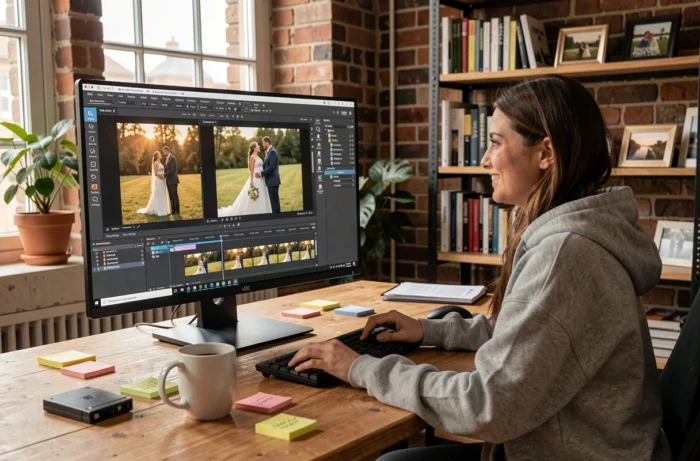
Wedding video editing: duration and rhythm of the final film
No one watches a forty-minute wedding film in its entirety, not even the couple. Feedback varies on this point, but the clear trend in recent years has been towards shorter, denser formats.
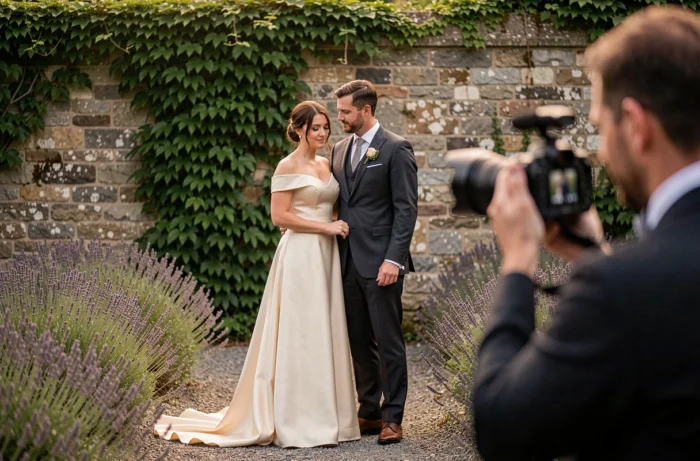
Two formats coexist today and cater to different uses:
- The teaser (two to four minutes): a rhythmic clip, edited to music, designed to be shared on social media or sent to guests shortly after the wedding
- The long film (fifteen to twenty-five minutes): a more complete edit that follows the chronology of the day, includes speeches, preparation moments, and the evening
- The vertical clip for stories and reels: a format of less than one minute, framed in 9:16, that some videographers offer as a complement for social media
Requesting both formats at the time of signing the contract allows for negotiating the overall price rather than paying an additional fee later.
The trap of overly long editing
A good editor cuts. The value of a wedding film is not measured in minutes but in preserved moments. Each shot must justify its presence: if it does not advance the story or convey emotion, it slows down the film.
Musical choice also matters. Using copyrighted tracks without a license exposes you to a block on YouTube or Instagram. Professional videographers work with licensed music libraries (Artlist, Musicbed, Epidemic Sound) that guarantee unrestricted distribution.
Live streaming and hybrid weddings: filming for the absent guests
The hybrid wedding, with some guests connected remotely, has matured. In 2026, some providers offer multi-camera live streaming in 4K, sometimes complemented by drone shots, so that distant loved ones can follow the ceremony in real-time.
This setup requires a reliable internet connection at the venue. We’re talking about an upload speed of at least five megabits per second for a stable high-definition stream. In a rural castle, this is not a given: a backup 4G/5G router is often necessary.
Dedicated platforms (Wedcast, Lovecast) allow remote guests to interact via chat, private video lounges, or even interventions displayed on screen during the ceremony. The live stream does not replace the final film but offers a moment shared in real-time.
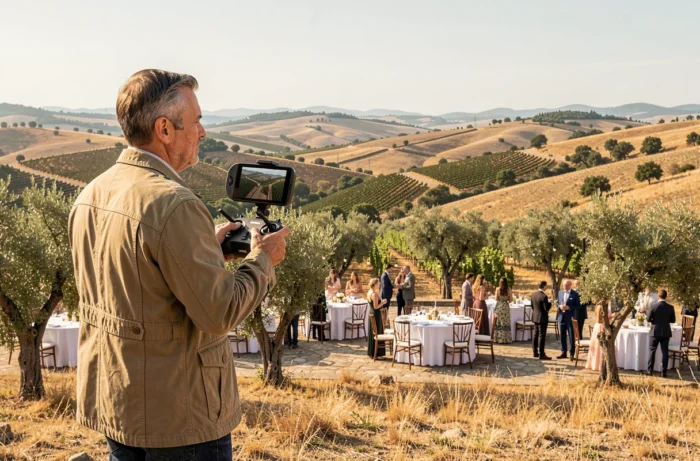
The wedding film revolves around three axes rarely addressed together: sound quality, mastery of on-site lighting, and the editing format defined in advance. A couple who validates these three points with their videographer before signing has a much better chance of reliving their day without grimacing at the result.