Wishing your colleagues a good vacation goes beyond a simple gesture of politeness. The format of the message, the channel used, and the tone chosen produce very different effects on team cohesion and respect for the right to disconnect. Since the law of June 28, 2023, companies whose employees use digital tools must define a regime governing this right, which changes the way vacation wishes are formulated.
This article compares ten concrete approaches, from collective messages to handwritten cards, measuring their relevance according to the professional context.
1. The collective message on the internal collaborative tool

Posting a message on Slack, Teams, or another collaborative tool allows you to reach the entire team in a single publication. This format has an often-overlooked advantage: it provides an opportunity to explicitly include a mention of the right to disconnect during vacations.
HR professionals recommend specifying in this type of communication the contact hours, emergency channels, and rules for delayed sending. A departure message that legitimizes not responding during vacations holds more value than a simple warm wish.
Before writing yours, you can check examples to wish a good vacation to all your colleagues with the tone suited to the professional setting.
2. The handwritten card slipped on the desk
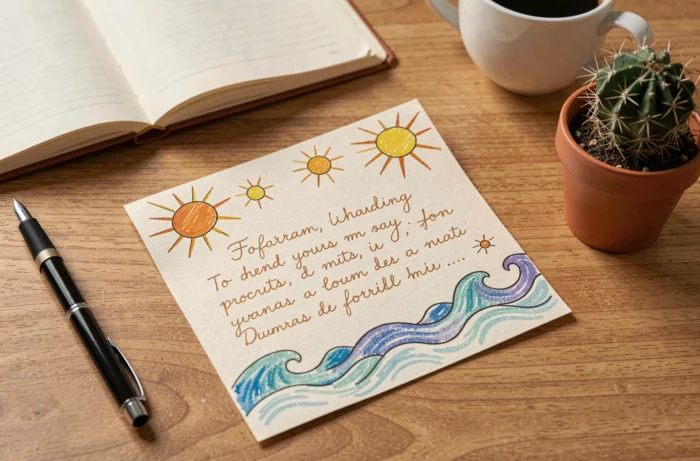
In an environment saturated with notifications, a handwritten card creates a disproportionate effect. The gesture takes a few minutes, but the physical trace remains visible long after returning from vacation.
This format is particularly suitable for small teams. Beyond ten people, the exercise becomes logistically heavy. However, for a manager who wants to mark the vacation departure of their direct reports, the handwritten card remains the most memorable format.
3. The humorous text sent via SMS or messaging

A funny message works as a stress reliever before vacations. Quirky phrases circulate better than formal texts and often generate spontaneous responses.
The limitation of this format lies in the register. A poorly calibrated joke in a hierarchical context can create discomfort. The humorous SMS is more suited to close colleagues than to strictly professional relationships.
4. The structured departure email with relay and instructions
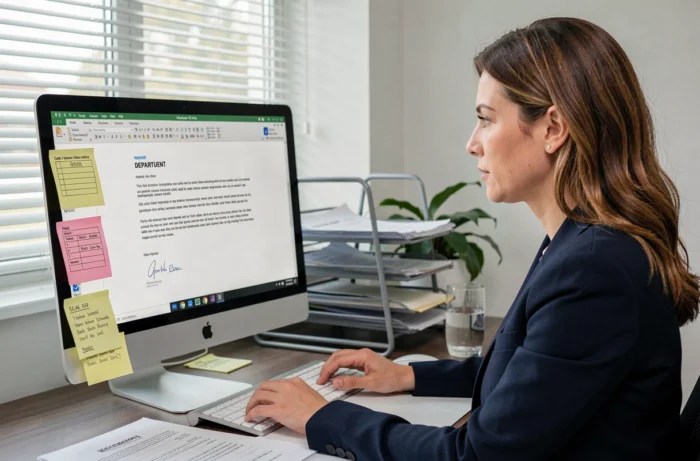
This format combines vacation wishes with practical information: absence dates, relay person, ongoing topics. It meets a concrete need of the team while marking the departure.
Companies that have formalized their disconnection policy include in these emails phrases that remind that messages received during vacations do not require an immediate response. This approach transforms a simple administrative email into a gesture of collective respect.
5. The short video recorded for the team

Recording a thirty-second video on your phone adds a personal dimension that text cannot reproduce. The tone of voice, the smile, and the spontaneous setting create immediate closeness.
This format works well on internal channels (Teams, Slack) but proves unsuitable for sending via traditional email, where file size poses a problem. The video is suitable for teams accustomed to hybrid work or remote work, where visual connection compensates for physical distance.
6. The collective gift accompanied by a note signed by everyone

Organizing a collection to give a small vacation departure gift (book, travel accessory, local specialty) transforms the wish into a team ritual. The note signed by each member adds a layer of personalization.
The collective gift marks longer departures (sabbatical leave, parental leave followed by vacation) more than standard vacations of a few weeks. For a standard departure, the gesture may seem disproportionate.
7. The post on the company’s internal social network

Some companies have an internal social network (Workplace, Viva Engage, Talkspirit). Posting a vacation message there makes the wish visible at the organizational level, not just the direct team.
This channel lends itself to inclusive phrases and messages that address multiple departments. The tone remains semi-formal, halfway between a structured email and a private message.
8. The quiz or themed game shared before departure
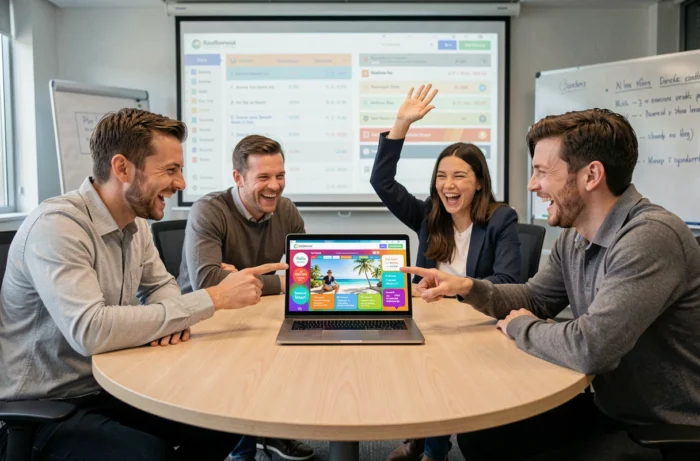
Sending a quick quiz about vacation destinations or the team’s summer habits creates a moment of collective lightness. Free tools allow you to create these formats in just a few minutes.
This type of initiative works best in teams that already practice informal rituals (virtual coffee, playful retrospectives). Without this culture, the quiz may fall flat. Here are the cases where this format proves relevant:
- Remote teams lacking informal convivial moments
- Staggered vacation departures over several weeks to maintain the connection
- Multidisciplinary teams where members do not all know each other personally
9. The shared collaborative playlist for the trip

Creating a common playlist on Spotify or another music platform offers a shared memory beyond the office. Each colleague adds a song that resonates with them, and the playlist accompanies everyone’s journeys.
The musical format avoids the constraints of tone and register that complicate written messages. No risk of a phrase being too formal or too familiar: music speaks differently.
10. The departure message integrating the right to disconnect
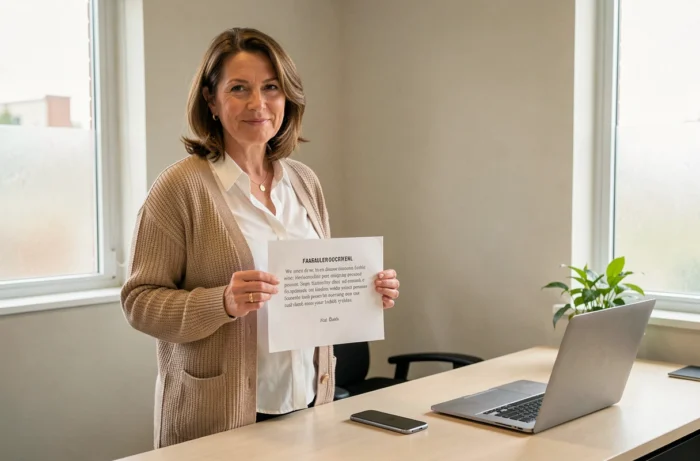
This last format goes beyond the wish: it sets a framework. More and more companies are incorporating into their vacation departure communications phrases that explicitly remind of the right to disconnect, in accordance with current legal obligations.
Such a message can include several concrete elements:
- The mention of time slots during which no professional messages will be sent
- The name and contact details of the relay person for emergencies
- A phrase that legitimizes the absence of response throughout the duration of the vacation
This format transforms a simple wish into a concrete managerial act. It protects both the one leaving and those who stay, clarifying everyone’s expectations.
| Format | Suitable channel | Ideal team size | Formality |
|---|---|---|---|
| Collective message (collaborative tool) | Slack, Teams | Any size | Semi-formal |
| Handwritten card | In person | Less than 10 | Personal |
| Humorous SMS | Private messaging | Close colleagues | Informal |
| Structured email with relay | Any size | Formal | |
| Short video | Slack, Teams | Hybrid team | Informal |
| Collective gift | In person | 5 to 15 people | Personal |
| Post on internal social network | Workplace, Viva Engage | Multi-department | Semi-formal |
| Thematic quiz | Online | Dispersed team | Playful |
| Collaborative playlist | Spotify, Deezer | Any size | Informal |
| Message on the right to disconnect | Email, collaborative tool | Any size | Formal |
The choice of format depends less on creativity than on context: team size, internal culture, and expected degree of formality. The table above allows for cross-referencing these criteria for each situation. The most useful format remains the one that combines a sincere wish with practical information, notably the reminder of the right to disconnect, now embedded in the French legal framework.