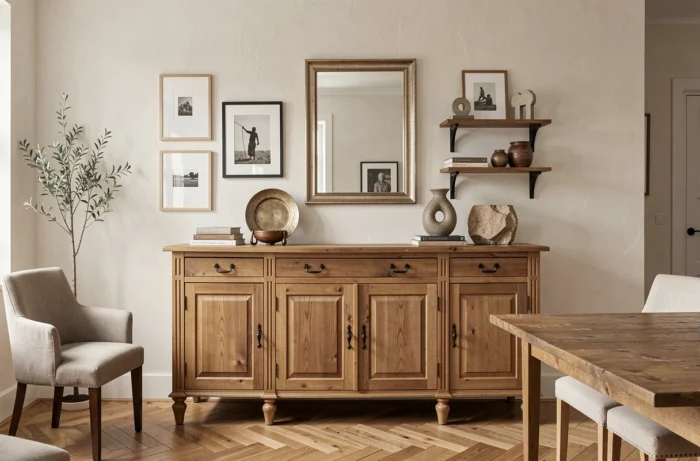
The wall above a sideboard represents a surface often underutilized. Its width, determined by that of the furniture, offers a natural frame to anchor a decorative element. The challenge lies less in choosing the object than in proportion: a wall decoration that is too small feels lost, while one that is too large overwhelms the furniture. Before making a choice, keep a simple guideline in mind: the width of the decor should not exceed two-thirds of that of the sideboard, and the center of the arrangement should ideally be at eye level, around 145 to 150 cm from the floor.
1. Large painting or poster in a single format
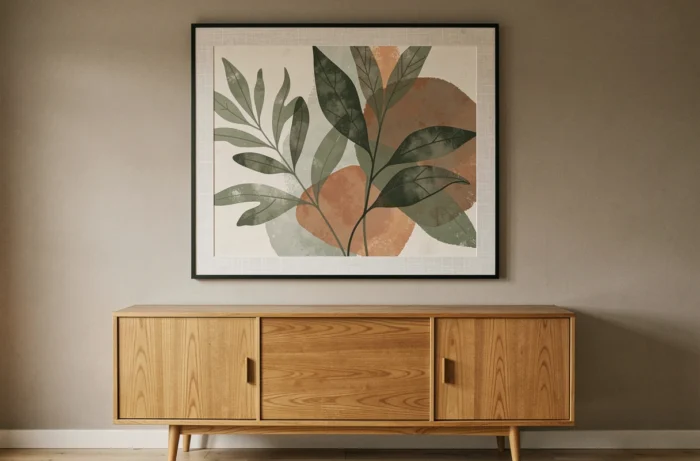
Rather than multiplying small frames, a single large-format painting (70 x 100 cm or more) simplifies the visual reading of the wall. This approach has been gaining popularity in recent seasons, with neutral, terracotta, or matte black palettes that adapt to most interiors.
The single format avoids the pitfall of an unbalanced composition. Simply center the artwork above the sideboard while respecting the two-thirds width rule. To discover CréAgencement’s decorating tips, this type of centerpiece remains the most accessible option when you want a clean result without drilling ten holes in the wall.
2. Oversized mirror with a textured frame
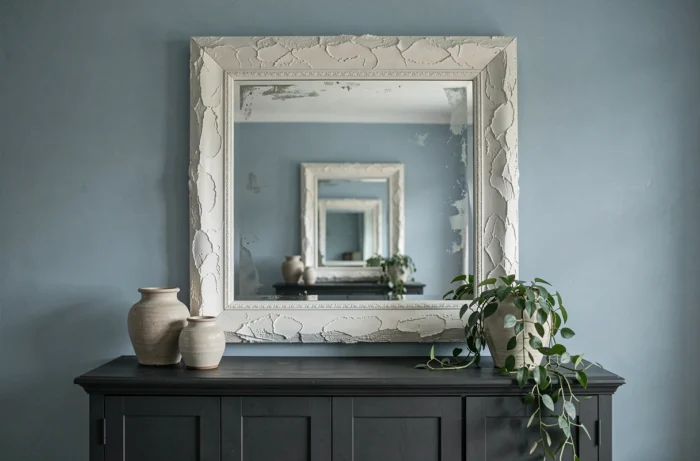
The mirror above a sideboard is a classic, but its appeal depends on the frame and format. A round mirror in rattan or raw wood adds texture, while a rectangular frameless mirror can look clinical quickly.
The functional advantage is real in a narrow room: the reflection visually pushes back the opposite wall. Be careful what the mirror reflects: a window or an organized shelf is fine. A dark hallway or a radiator is not. Test the effect before fixing it.
3. Asymmetrical composition of mismatched frames
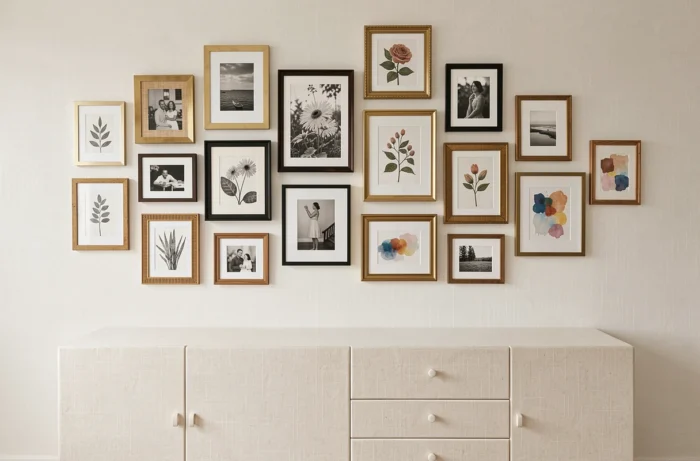
The gallery wall remains popular, but overly symmetrical compositions (four identical frames in a square) have lost their charm. Asymmetry, with frames of different sizes and finishes, yields a more personal result.
Start by laying out the arrangement on the floor before drilling. Place the largest frame slightly off-center, then distribute the others around it while maintaining a regular spacing of a few centimeters. Mixing black and white photos, botanical illustrations, and typography works well if the color palette remains consistent.
4. Slim shelf with sculpted objects
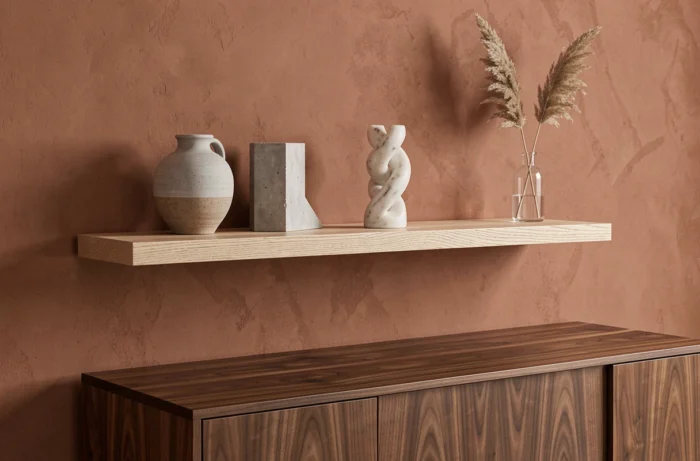
A narrow wall shelf (depth of ten to fifteen centimeters) allows for changing decorations with the seasons without touching the wall. Ceramics, small vases, candlesticks, or books can be placed on it: the content evolves without constraints.
The common pitfall is overloading. Three to five objects are sufficient on a one-meter shelf. Vary the heights of the pieces to create relief, and leave empty space between each object. An overly filled shelf produces the opposite effect of what is desired: the wall appears cluttered instead of dressed.
5. Sculptural wall sconce
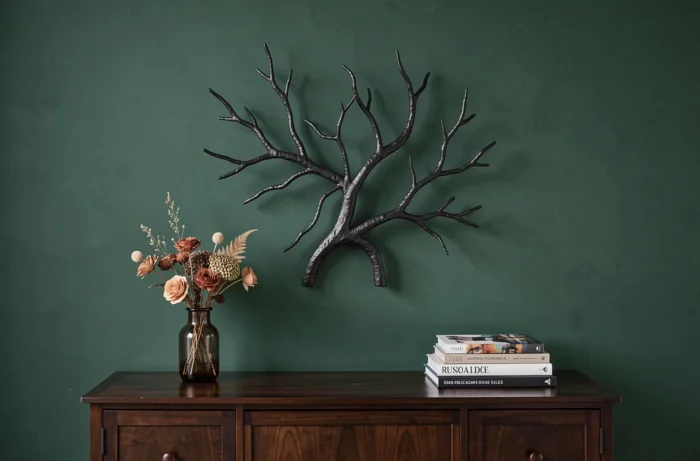
The wall sconce serves two functions: it decorates and it illuminates. Sculptural models in brushed brass, ceramic, or black metal act as a focal point even when off.
Position the sconce in the upper third of the wall, above the sideboard, so that the beam illuminates the objects placed on the furniture. A pair of symmetrical sconces framing a mirror or a painting creates a structured effect. Consider the electrical supply: if there is no wall outlet, models with visible cables and a toggle switch avoid major renovations.
6. Panel with vertical wooden slats
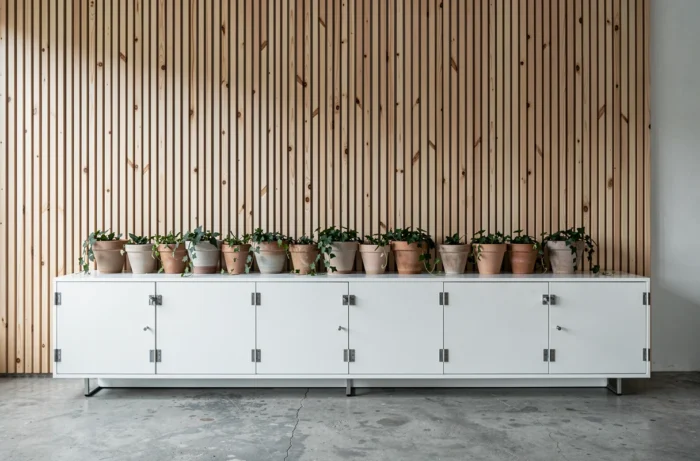
Vertical wooden slats fixed to a panel create a textured relief that dresses the wall without adding objects. The effect is architectural, almost like a headboard transposed to the living room.
Light wood (pine, bleached oak) lightens the room, while walnut or dark oak adds depth. The width of the panel should match that of the sideboard to avoid a misalignment effect. This type of project is suitable for DIY if the wall is straight and load-bearing.
7. Panoramic wallpaper in a single panel
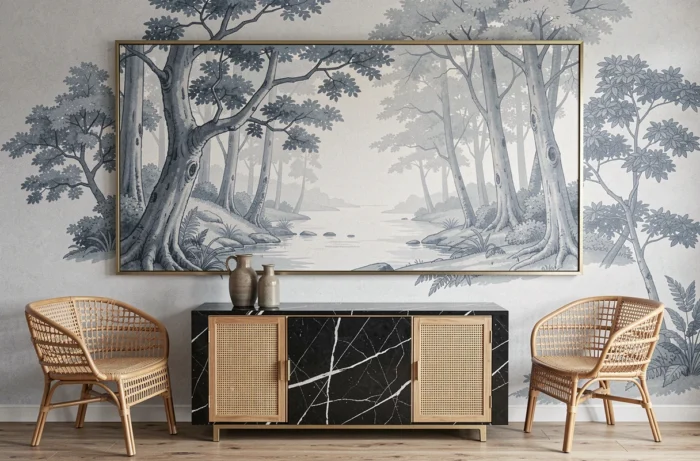
A panel of panoramic wallpaper, applied only to the portion of the wall above the sideboard, delineates a decorative area without overwhelming the room. Landscape, plant, or abstract patterns work particularly well on this framed surface.
Wallpaper replaces paintings and frames in a single application. The height of the panel can extend from the top of the furniture to the ceiling for an immersive effect, or stop two-thirds of the way up the wall for a more contained look. Ensure that the pattern remains readable once the sideboard is filled with objects in front of it.
8. Cascading plants on a wall support
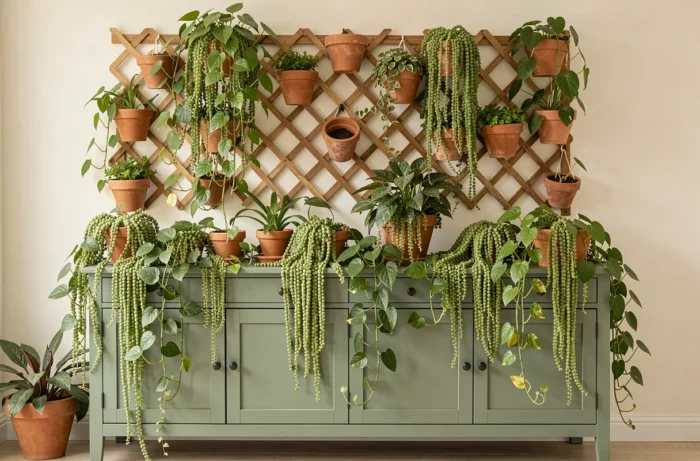
Wall supports (hooks, bars, small hanging planters) allow for installing cascading plants like pothos, ivy, or string of hearts. The foliage that descends towards the sideboard creates a visual link between the wall and the furniture.
This option brings life to a room but requires regular maintenance: watering, sufficient light, and cleaning the leaves. Prefer a wall close to a natural light source. If the exposure is low, high-quality artificial plants are a decent alternative.
9. Large wall clock
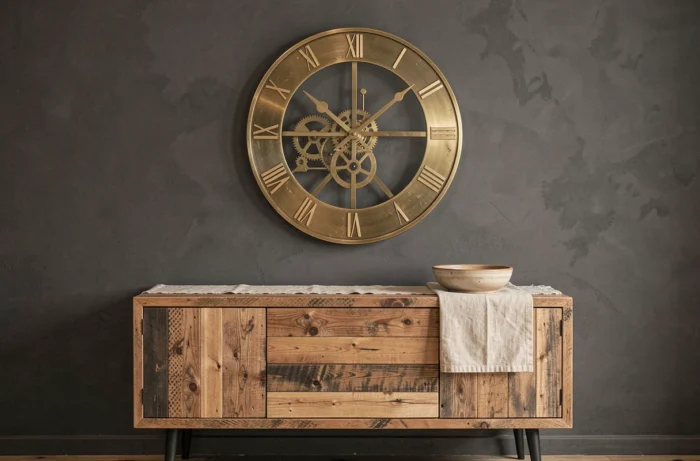
A large-diameter clock occupies the wall by itself and provides a useful function in daily life. Models in perforated metal or cut wood have the advantage of not visually weighing down the surface.
Center the clock above the sideboard and ensure that it does not visually touch the upper edge of the furniture: a space of at least fifteen centimeters between the top of the sideboard and the bottom of the clock maintains breathing room. Avoid clocks with gold Roman numerals if the rest of the furniture is contemporary: the style mismatch is glaring.
10. Framed mural or street art
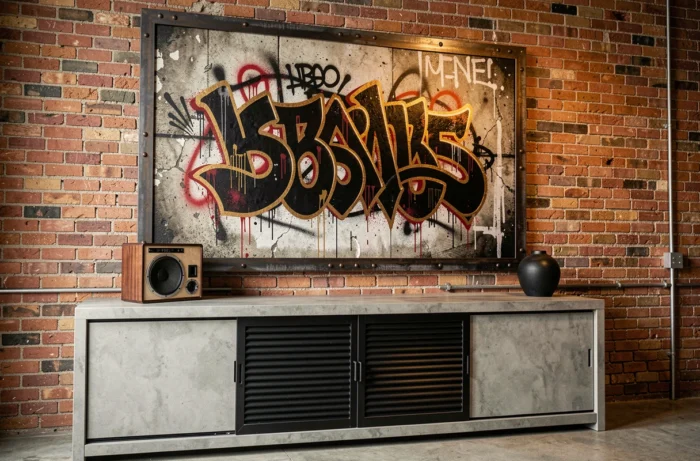
Street art finds its way into interiors in the form of framed reproductions or murals painted directly on the wall. This choice contrasts with classic decor and gives a strong character to the room.
A signed reproduction, properly framed with a mat, is enough to create the effect. The painted mural, on the other hand, requires the intervention of an artist or good wall painting skills. In both cases, the subject and colors should harmonize with the sideboard: a raw wood piece supports a contrasting visual well, while a lacquered sideboard calls for a more restrained palette.
The wall above the sideboard benefits from being treated as a frame predefined by the furniture. Whatever option is chosen, respecting the two-thirds width proportion and positioning the decor at eye level remains the foundation for a balanced result. It is better to have a single well-sized element than an accumulation that muddles the reading of the space.